Pray Brethren

Pray Brethren

Friday, September 30, 2011

The Forgotten Vice in Seminary Formation

Fr. James Mason offers his reflections on life in the seminary as he prepared for the priesthood, and he tells us that the key vice never addressed in seminary is precisely effeminacy. Drawing on Aquinas, and the Fathers of the Church, Fr. Mason points out the fact that effeminacy in men, and thus in the priesthood, has long been condemned as disordered – and since it is such a major issue in our seminaries, it is an issue which can neither be tolerated nor overlooked any longer.

Effeminacy has not always been a problem in our priests, but as Christianity in Western culture has become more and more dominated by women and seen as a “religion for women”, more and more effeminate men have entered into Christian ministry, be it Catholic or Protestant. Furthermore, Fr. Mason tells us that this problem is only multiplied when these effeminate men are elevated to the episcopacy, saying that, “there are many bishops, faculty and priests who suffer under this vice and are therefore unwilling or unable to recognize it or address it.”

While offering no comprehensive solution to the problem nor addressing the many homosexual predators that have infiltrated the priesthood, Fr. Mason tells us that bishops must play an active role in the formation of their priests:

Bishops need to take an active role in knowing and forming their priestly candidates. It is, perhaps, not only his most important decision but also the decision he will be held most accountable for. My own bishop is one of the few if not only bishops in our country who has every seminarian live at least a summer in his residence. He knows the men he will ordain.
The more bishops understand that they together form an apostolic fraternity under the Pope and that their own priests follow the same model under them, then they can truly purge their ranks of any Judas’ among them and offer the sacrifice of Christ as men, lifting up the Body of Christ and drawing all men into the Body of Christ (John 12:32).

The Adam of Faith versus the Historical Adam

In recent decades, some theologians and skeptics have attempted to sharply divide Christ in two: the historical Christ and the Christ of faith. In a watered-down return to the fifth century heresy of Nestorianism, there is the Jesus of Nazareth as the human of history and Jesus the Son of God believed by faith. Two very distinct persons. In his recent books, however, Pope Benedict XVI has reminded us of the deep connection between history and faith, saying that “the very essence of biblical faith [is] to be about real historical events. It does not tell stories symbolizing suprahistorical truths, but is based on history, history that took place here on this earth.”

But another history versus faith controversy has been brewing. This time about the existence of Adam, from whom the rest of humanity descends. Now beyond the debate over evolution, there are an increasing number of theologians who have thrown out the historicity of Adam (and the Devil) as a mere morality tale of ancient Hebrew myth. Both Adam and the Devil, however, are crucial figures for the basis of the faith, and the categorical denial of either Adam or the Devil enables one to evade the question of evil altogether. For if Adam and the Devil becomes a matter of myth then we can likewise place evil into the same mythic category with them since the chain of evil, if we could call it that, runs squarely back to them.

Both figures are so important as historical actors in the drama of salvation history that two particular popes within the last hundred years have spoken definitively of them. Leo XIII taught us to be on guard against the Devil through recourse in prayer to St. Michael the Archangel, who cast Satan and his minions out of Heaven. Until the 1960s, every Catholic recited this prayer together before leaving Mass. The other pope was Pius XII, who, in an encyclical called Humani Generis, definitively rejected a notion called polygenism which states that:

…after Adam there existed on this earth true men who did not take their origin through natural generation from him as from the first parent of all, or that Adam represents a certain number of first parents. Now it is in no way apparent how such an opinion can be reconciled with that which the sources of revealed truth and the documents of the Teaching Authority of the Church propose with regard to original sin, which proceeds from a sin actually committed by an individual Adam and which, through generation, is passed on to all and is in everyone as his own.
The current most controversy over polygenism has surfaced over at Dave Armstrong’s blog, Biblical Evidence for Catholicism. Mr. Armstrong’s blog is a wonderful resource for any Catholic seeking to learn how to defend the Faith from Scripture so be sure to check it out. This particular issue of polygenism, however, concerns Fr. Robert Barron of Catholicism fame (see my previous post). According to Fr. Barron’s video weblog, Adam is not to be read literally. In Fr. Baron’s words: “We're not talking about a literal figure. We're talking in theological poetry.” This kind of language has lead to a large debate on facebook, but the full article from Mr. Armstrong on the matter can be read here.

Fr. Baron has yet to reply in any capacity.

Monday, September 26, 2011

Liturgical Renewal

There has been a deep divide among Catholics over the past fifty years. Some people use political terms like conservative or liberal to describe this division. On the one hand, there are the “conservative” radical traditionalists (often called RadTrads for short) who believe the Church must reject the novus ordo Mass and return to the Latin Tridentine Mass prior to Vatican II. On the other hand, the “liberal” peace and justice, inclusive Catholics believe we have not gone far enough and thus the Church should change her dogmas, ordain priestesses, and reduce the moral teachings of the Church to feelings.

Finding themselves between these two groups, many bishops have attempted to walk a middle path – but often this path meant pandering to the “progressives” while seemingly punishing the traditionalists. This itself has occurred in large part because the bishops know traditionalists within the Church will do as they’re told out of some sense of piety while the liberals simply do not accept the authority of the Church, especially a Church led by an all-male clergy. Sadly this middle path has left many faithful Catholics feeling betrayed or scandalized as the bishops practice a policy of appeasement in order to keep the liberals from staging a revolt. In 2010, Archbishop Nienstedt witnessed such a revolt at St. John’s University over his public explanation of homosexuality, an explanation faithful to Church teaching and natural law.

Some bishops have declared themselves catechetical bishops, social justice bishops, or evangelical bishops – but this emphasis on what they seek to accomplish during their episcopate is rather like describing the Trinity in terms of job titles: Creator, Redeemer, and Sanctifier rather than Father, Son, and Holy Spirit. The real power of the bishops is in liturgy, for it is in the liturgy where the faithful are catechized (both in body and spirit); it is in the liturgy where the faithful are taught social justice; it is in the liturgy where the faithful are evangelized, becoming more the Body of Christ by receiving the Body of Christ.

With this understanding of the profundity of the liturgy, here are some ways we can renew the Mass, and by doing so better catechize, evangelize, and produce real social justice:

1. Renew the Language of the Mass

On the first Sunday of Advent, the Church will do just this by implementing the translation of the Roman Missal into English. Generally speaking, the words are a vast improvement on what has been used for several decades. The new words act to re-inject sacral language into the Mass, helping Catholics to realize that a greatest prayer of the Church requires language far above the idle words of street talk. Click here for a comparison of the old and new translations.

2. Reserve the chalice for the priest

A recent talk I attended on the new translation included a discussion on the change of the word cup to chalice during the consecration. The speaker preferred the current translation over the new translation because Jesus would have used a simple cup at the Last Supper instead of a gold chalice. But this overly historical approach sadly overlooked the Biblical and theological understanding of the word chalice. The chalice is a specific kind of cup used for sacrifice. Indeed the passion and death of Christ was the chalice of sacrifice which the Father gave to Jesus for the good of our salvation – and priests, configured to Christ through Holy Orders, are the ones who offer up the one sacrifice of Christ to the Father in the liturgy. Because of this, it is proper to ordinarily reserve the chalice for the priest. This idea is now taking traction in the Archdiocese of Phoenix where Archbishop Olmsted has drawn on the new translation of the Roman Missal and new norms for reception of Communion to do just this. Reserving the chalice to the priest will also work to limit the number of unnecessary extraordinary ministers of the Eucharist. Feel free to check out this Q&A on the matter from the Archdiocese of Phoenix.

3. Reinstate boy servers and acolytes

Studies show that when boys and girls work on projects, tasks, and assignments, boys will often times sit back and let the girls do the work for them. Sadly this has discouraged many boys from serving at Mass – and in effect, having boys and girls serve is the best way to reduce the numbers of priestly vocations. Canon law speaks of acolytes as a specific form of server for boys only and a full acolyte is also an extraordinary minister of the Eucharist. Reinstating an acolyte program for high school boys would be a great way to teach young men the Mass while providing them with additional opportunities to prayerfully consider their vocation.

4. Restore the ad orientem posture of the priest

In a society caught up with sexual disorientation, the faithful have much to learn from liturgical orientation. The priest, sacramentally configured to Christ, represents us to God at Mass – and as our representative the priest and people face the same way: toward God. This is known as the ad orientem posture, a posture derided as the priest turning his back on the people. But we must remember that the Mass is spiritual warfare and the priest, like Christ, stands ready to take the first spiritual bullet for our salvation. The priest goes to war at the altar and makes present the blow dealt to Satan at the cross. When the priest stands and represents us, we should cheer him on and thank God we have a warrior there to protect us.

5. Deepen Eucharistic Reverence

The second point of renewal focused on reserving the chalice for the priest, but another way to deepen Eucharistic devotion would be to reinstate the norm of receiving the Eucharist on the tongue in a kneeling posture. This the norm Pope Benedict XVI uses in his Masses and it is one which would certainly be more reverent than the “lunch line” Communion we have now where almost no one makes a sign of reverence before receiving the Eucharist. Furthermore, if this point is combined with point two, the long lines at Communion will be drastically reduced and it would enable the priest and deacon to be the ordinary ministers of the Eucharist while limiting the need of 5-10 extraordinary ministers of the Eucharist.


None of these points of renewal is a repudiation of the novus order Mass. Instead, these are simple ways to make the novus order what the Fathers of Vatican II intended it to be. Indeed, this is the true middle path our bishops should follow. It is a path that will catechize, evangelize, and enliven the laity to practice the spiritual and corporal works of mercy. The key to any successful episcopacy is not in pandering to the politically correct, but rather in allowing the liturgy to be what it is – because the real power of the bishops is truly found in the Paschal Mystery made present in the liturgy.

Sunday, September 25, 2011

God and Morality

Paul Froese and Christopher Bader, both sociology professors from Baylor, published a book last year called America’s Four Gods. Their work analyzed a survey of American views on God, breaking the poll data into four kinds of Gods:

1) The Authoritative God: A God who is both engaged in the world and judgmental about our actions.
2) The Benevolent God: A God who is engaged in the world but who makes no judgmental calls on our actions.
3) The Critical God: A God who is not engaged in the world but who is judgmental about our actions.
4) The Distant God: A God who is neither engaged in the world nor who makes judgments on our actions.

Obviously the Baylor professors focus on American’s perspective of how engaged in our affairs God is and how concerned He is about our actions. By their results, Froese and Bader found that over half of those surveyed view God as either Benevolent or Authoritative. All four views of God, however, present God in a transcendent manner – that God does not exist in matter but rather outside our material universe. How involved He is becomes another matter. What’s more, no one in the survey imaged this transcendent God in feminine terms. Given God’s transcendence, God is viewed as masculine, probably masculine, uncertain, or not applicable.

Overall, the emphasis on God’s transcendent nature is helpful for Americans to step away from a pantheist conception of God – but the study showed that the more transcendent one views God, the more he is inclined to reject a moral law written by God into nature or revealed by God through religion. The results show that only believers in an authoritative God also believed that the Ten Commandments really mean what they say, that adultery, homosexuality, abortion, and stem cell research were really sinful. Belief in the Distant God, strikingly similar to Deism, can easily lead one to practical atheism and a Dostoyevsky-sounding principle that: If God is distant enough, anything is permissible.

Which brings me to a final point on morality and God.

Christian Smith, currently a sociology professor at Notre Dame, coined the term Moralistic Therapeutic Deism to describe commonly held religious beliefs of American youth. This belief reduces religion to a morality of good feelings, leaving out particular theological doctrines and keeping God out of human affairs unless we have a particular problem. Moralistic Therapeutic Deism is not particularly defined in America’s Four Gods, but if it is the predominant view of our youth, we will certainly see it enter into future surveys. This new belief may be a sign that Americans are moving further away from the New Age pantheism of the 1960s-1980s, but arming our youth with a mere belief in good feelings leaves them such an empty morality that almost none will have a moral foundation when they encounter real temptation and real evil.

For more on God, morality, and American youth, check out this article by Dennis Prager called: Why young Americans can’t think morally. Another thought-proving article on this topic is by Rod Dreher, called: The soft barbarism of young America.

Saturday, September 24, 2011

Masculine and Feminine Offerings

John Paul II’s Theology of the Body states that a true communion cannot exist without the mutual offering of each person’s self-gift to the other. In marital terms, this idea stresses the husband’s offering of himself to his bride and vice versa. While this remains true, let us make two anthropological and theological distinctions between masculine and feminine offerings.

Henri de Lubac spoke of the Fall of Man as being the atomization of Adam throughout the world. In other words, the human race was meant to be united under the headship of Adam but has now become a schizophrenic conglomeration of self-willed individuals. Men were to be united in Adam so as to “fight as one man” in a just war against the fallen Lucifer and his demonic minions.

And this is why the Body of Christ is so important.

Adam may have fallen, but God sent us His Son so that we can be reborn into His body. Christ, in other words, is the new Adam according to St. Paul, and humanity in Christ’s body are restored to the Original Mission which was meant to be fulfilled by Adam and his sons. Now in baptism we are made the sons of God by taking on Christ’s identity through entering into His Body, the Church.

Turning back to the concept of masculine versus feminine offerings, we can think back to the Paschal Mystery in which Christ truly offers up His body. His suffering, death, Resurrection, and Ascension all occurred so that we could become the body which He offered up. Every time we go to Mass and hear the priest say, “Take and eat, this is my body,” we do not simply ingest Christ, rather we are further transformed into the thing we eat: the Body of Christ!

At Mass, the sons of God making up the masculine Body gather to become ever more the Body of Christ. This is why the priest says: “Pray brethren…” in the Liturgy of the Eucharist. Thus the Mass is not meant to gather “me and Jesus” Catholics, playing feminine praise and worship music so that Mass becomes a place for deeply individual worship. Rather, the Mass is public, corporate, and thus profoundly masculine.

When Jesus called his men, configuring them to his own person and asking them to give up their bodies in order to offer His, the result was the Church. And just as the masculine offering of clergymen creates the Church, so the masculine offering of laymen creates the nations. The blood-stained battlefields are a testament to that. Self-seeking individualism is overcome through the blood and sacrifice of men, and the model of this par excellance is Christ and his Apostles – a model that should always be exemplified in Christ’s clergy, the bishops and priests who daily offer the blood and sacrifice of Christ.

This is also why the greatest insult to a man is to be called a coward. Every man knows he is required in some way to offer up his own body in sacrifice as a member of a corporate masculine body. Any man who refuses to do so has rejected a fundamental aspect of his masculinity and thus has received the most unmanly title of coward.

Now while men are called to offer their bodies in corporate groups for the protection of others, woman offers her body in a very personal, intimate, and unique way to her husband and her husband alone. But just as the masculine offering results in the birth of the Church or the birth of the nation, so the offering of the woman’s body results in the birth of the child. This is yet another reason why abortion stands opposed to authentic femininity. The pro-choice movement and pacifism thus become the two great threats to man and woman, for both are refusals to fully offer up the body for the protection of others.

Abortion, however, is not the only way a woman refuses to rightly offer her body. A woman offers the gift of her virginity to her husband in order to bear the fruits of their union through childbirth. Abortion usually results when a woman has offered herself to many men, and thus it should not surprise us that a woman who has emptied the gift of her virginity now empties out her womb as well. The temple to be protected has now been desecrated.

And just as man receives the shameful title of coward when he rejects his masculine duty, so too the woman receives a shameful title when she rejects her feminine duty, and that title is whore. To be called a coward or a whore are the two most shameful titles for man and woman – but they are reflective of the nature of masculinity and femininity and the ways men and women are to rightly offer their bodies. As men and women, let us create the culture of life by offering our bodies rightly so as to protect and create life.

Check Out Person of Interest

Mel Gibson is not the only person from the Passion of the Christ to be making a come back these days. This past Thursday Jim Caviezel - the actor who played Jesus in the movie - hit CBS in a new drama Person of Interest.

The show is well worth checking out.

Caviezel plays an ex-CIA agent named Reese, who was recruited by a wealthy businessman to fight violent crime in New York. Given a name and social security number from a secret government surveillance program, Reese doesn’t know if the person of interest is the victim or the perpetrator. With plenty of twists and turns, Person of Interest will keep you guessing, entertained, and pleasantly surprised.

Unlike most crime shows with “dark” good guys, Jim Caviezel’s Reese offers us a very haunted but upright and just man who will not hesitate to use physical violence to fight evil, protect others, and even evangelize the bad guys.

“I went around the world looking for bad guys,” Reese says, “but there were plenty of you right here all along.”


Be sure to check out Person of Interest this weekend while the first episode is available to watch at the CBS website.

Thursday, September 22, 2011

Panentheism and the Gnostic Reaction

Differing from pantheism (which is the belief that God and the physical universe are coextensive, that God and the universe are two sides of the same coin), panentheism states that everything we see, taste, touch, hear, and smell is divine but that God’s existence also extends beyond this universe. In other words, the physical universe is a part of God though not the whole of God. In this book Handbook of Christian Apologetics, the philosopher Peter Kreeft calls panentheism “clearly heretical.”

Sadly not all Catholics agree.

Panentheism bills itself as a compromise between the transcendent God of theism and the immanent god of pantheism. Now every good Christian recognizes that the physical universe (and for that matter, angels too) is sustained by God. Everything made by God was made from nothing and without His continual decision to sustain us, we would go back into the nothingness from which we came. Furthermore, everything that exists is good insofar as it exists. Panentheism, however, sadly fails to make the distinction between Creator and creation.

Nevertheless, there are those who argue that some Eastern Christian mystics and modern theologians have embraced a kind of panentheism that we, too, should accept.

But what really popularizes this among some Catholic theologians is perhaps an overreaction to the many forms of Gnosticism throughout the ages – especially one of its key tenants: the material universe is evil and made by an evil god. Catholics had to defend the faith against this heresy, and also against a rather Gnostic-sounding Protestant Christianity which denied that God could interact with us through material objects (i.e. sacraments, sacramentals, male priests, etc.).

Given the “Gnostic Reaction” and the belief in “ontological goodness” (that everything which exists is good insofar as it exists), there is a tendency among some Catholic theologians to drift dangerously close to panentheism and a universalism which can stem from it. We must not forget that evil really exists and that we have a duty to defeat it. It could be found in our own hearts, or it could be found in men like Stalin, Hitler, and bin Laden. In the end, there is a real heaven, a real hell, and a real judgment between good and evil.

Thursday, September 15, 2011

Masculine Body, Feminine Bride

St. Paul describes the Church as both the Body of Christ and the Bride of Christ. Now there is a great deal of theology behind both of these terms, and while many words have been said about them, their theological depths can be plunged still further.

One way to think of these mysterious descriptions of the Church is to think in terms of masculine and feminine.

The concept of the bride being feminine is quite obvious, but discussing the body as masculine may need a few words of explanation. The easiest way to think of a masculine body is that the body takes its identity from its head – and in the case of the Church, the head of the body is Jesus Christ, God the (very masculine) Son. We become the sons of God because we have entered into the Body of the Son and are thuse sons in the one Son of God. As such, the Church as body takes a masculine, public, external, non-intimate orientation in structure and worship. This is not only one reason why the liturgy is formal and celebrated by men and but it is also why praise and worship music (along with any other individualistic acts of personal intimacy with God or others) should not be a fixed part of the Mass.

This brings me to another point: there is an overemphasis on the bridal aspect of the Church.

Now don’t get me wrong, the Church is the Bride of Christ – but we often come together to celebrate the liturgy as the Body of Christ and then pretend like we’re just the feminine bride, not masculine the body. Understanding we are the Bride of Christ is one thing, but forgetting that we are the Body of Christ is another. To be in the Body means to be under the authority of the masculine Christ and those men he has entrusted his Body (which here means not only the Church but the Eucharist as well, for the former makes the latter and the latter builds up the former).

Strangely, traditional Catholics mock the “praise and worship” Catholics for being bad-imitation Evangelical or Pentecostal Protestants. The reality is that it is not the praise and worship that is wrong (for outside of the Mass, personal devotion can take many forms), but that that the Evangelicals have led Catholics to believe that the “me and Jesus” intimacy, like a bride with her husband, is all we really need – but to keep it Catholic, “Catholic evangelicals” believe that that intimacy must somehow be injected into the liturgical and sacramental structure of the Church.

But this is just as disastrous as the liberal watering-down of the liturgy.

If we are to learn anything from the Protestants, it should be the geo-political lessons learned in the rise of nations during the 16th-18th centuries. While the U.S. bishops have yet to rid their ranks of practicing homosexuals, preferring instead to voicing their concerns as a kind of Congressional Subcommittee on Morality, the idea of the manly, hardworking, self-sacrificing, nation-creating Protestantism is dying a hard death. This is of course in part because Protestantism has no Magisterium and thus it lacks the backbone and institutional memory of the Catholic Church. We as Catholics must pick up the falling banner of the nations under God before the dwindling Protestant nations lose it altogether to the feminist-Leftist, mainline Protestant denominations and the feminine-intimate, Bride of Christ Evangelicals.

Sunday, September 11, 2011

We Will Never Forget

Those who claim that violence is senseless do not understand war. The Japanese sneak attack at Pearl Harbor was meant to destroy our air craft carriers (which providentially were out to sea on December 7, 1941). September 11, 2001, however, was an attack by anti-national jihadists who hoped a blow at America’s economic and military heart would cause us to withdraw from the world our chief export: international security and stability. If the American will could be shaken, the caliphate dreams of the jihadists could become a vision of the future. The jihadists hoped we would react as Spain did after its own 9/11, the Madrid train bombing of 3/11/04.

The Spanish will to fight terrorism was all but broken. Within a month, their troops were withdrawn from Iraq.

The United States could have done what Spain did, but 9/11 brought out the best in us. It brought out prayer, it brought out the warrior, and it has brought out the two fledgling nations of Iraq and Afghanistan. 9/11 showed us what evil looks like, but it also reminded us of who we really are as Americans. As we remember what happened ten years ago and in the years following, let it be a reminder to us of what President Lincoln said is:

the great task remaining before us -- that from these honored dead we take increased devotion to that cause for which they gave the last full measure of devotion -- that we here highly resolve that these dead shall not have died in vain -- that this nation, under God, shall have a new birth of freedom -- and that government of the people, by the people, for the people, shall not perish from the earth.

Thursday, September 8, 2011

Mel Gibson is Back

Love him or hate him, Mel Gibson is back and the news today is that he is moving forward with writer Joe Eszterhas to make a movie out of I and II Maccabees.

You can read the official story here.

In case you are unaware, these two books are not found in the Protestant canon of Scripture but they are the central texts from which the celebration of Hanukkah is derived. More specifically, I and II Maccabees tells the story of a devout Jewish father and his five sons leading a revolt against the Greeks in Israel. Their goal: drive out the pagans, retake Jerusalem, and rededicate the Temple to the one, true God.

Now say what you want about Mel's personal life, but hearing an epic story of a father and his obedient sons in combat against evil is exactly what we need right now.

Thank you Mel.

The New Mass Translation

Two years ago I picked up a copy of the booklet Understanding the Revised Mass Texts by Fr. Paul Turner. It served as a nice preview of things to come. And as it turns out, Fr. Turner is a local priest in the nearby Diocese of Kansas City-St. Joseph and I had the chance tonight to hear him speak in person regarding the new Mass translation.

For those who do not know, the current translation of the Mass into English is a “dynamic equivalent” of the original Latin whereby the “spirit” of the Latin is used in the English text rather than a literal, roughly word-for-word translation. The new translation, however, will be direct. Now, if you’d like to get a nicely packaged rundown which explains the new translation process, check out the video here. In short, the new translation will more accurately convey the Latin and restore some of the prayers and gestures that have been set aside since the 1960s. There will also be some new prayers. For example, priests currently have four Eucharistic prayers to choose from when they celebrate Mass – but the new texts have increased that number to sixteen. Sadly, these new prayers for the priests will not be published for general readership until October 1.

But if you’d like to start learning your new prayers and responses, check out this PDF from the U.S. Conference of Catholic Bishops.

Back to Fr. Turner. During the translation process, each of the eleven English-speaking bishop’s conferences has sent one of its bishops to meet and discuss the translation. Fr. Turner has served for the past five years as a secretary to that international group of bishops. Given his excellent booklet and eyewitness account of the translation process, I was very excited to hear him speak. Overall Fr. Turner gave a wonderfully erudite presentation. I was left, however, with a sense of tension between the new text’s faithfulness to the Latin versus its attempt to draw in more scriptural grounding.

One example of this is the neutering of the Holy Spirit in revised Creed.

Fr. Turner explained to me that the Latin text doesn’t use a gendered pronoun for the Holy Spirit, so in this case they opted for a neutered translation in order to be “more faithful” to the original Latin even though Jesus clearly uses the masculine pronoun for the Holy Spirit (see John 16:8, 13-15) and the Holy Spirit acts in a very masculine way during the Annunciation and Pentecost. Indeed, if Mary is the Spouse of the Holy Ghost, then we are certainly dealing in masculine-feminine imagery. Fr. Turner, however, left everyone with the strong impression that this was done in order to appease the feminist, gender-neutral crowd within the Church.

In other words, the bishops are allowing bad philosophy to guide them into questionable theology in order to score political points with heretics. Let us be clear: we will not be able to extricate the feminist implant from society until we exorcise it from our clergy and from our liturgy, which is the "source and summit" of the Christian life.

In the end, no translation is perfect but I am very pleased with much of the new wording coming out on the first Sunday of Advent. And if you’re looking for ways to get ready, I recommend checking out the links above – or you could also get yourself a copy of Scott Hahn’s The Lamb’s Supper on the scriptural basis of the Mass. Let’s get ready!

Women Talk, Men Act

In an earlier post on the dignity of male and female, I offered some quotes of Archbishop Fulton Sheen on the “God-given qualities” specific to male and female. Many of my friends – most of them very devout and theologically orthodox Catholics – dismiss Sheen for representing an “out-of-date” and politically incorrect viewpoint. It should strike us as an oddity that we modern Catholics, who hold fast to Scripture and Tradition when it comes to our belief in the Eucharist (for example), would suddenly abandon both when it comes to gender.

These same people, however, step back when I address the matter from the perspective of science.

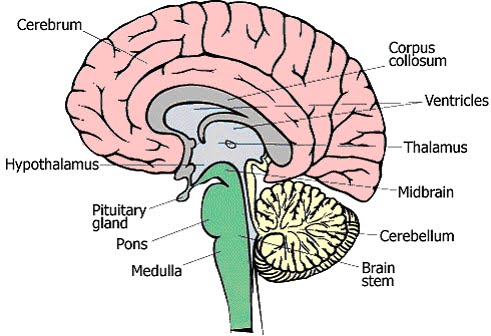
As it turns out, there is nothing wrong in speaking of the male brain and the female brain. One big difference between the two is how men and women react to sensory input. The brain itself is structured in an ascending order. At the base we find the brain stem where our instincts and “fight-or-flight” reflexes are handled. It is the lowest part. Moving upwards we find the cerebellum and limbic system. Here the sensory data from our eyes, ears, and taste are processed. At the highest point of the brain is located the cerebrum where our complex thinking occurs.

Now when women react to intense sensory data, the brain routs the data up and into the cerebrum where women think over and talk through the experience. In men, however, God decided that it would be better for us to route our reaction down rather than up. This means that the brain stem takes the helm, and men react through physical action rather than through talking. Sadly our psychology-driven society which stresses non-violence and merely talking through our issues fails to recognize basic characteristics of man. Thankfully our Faith has always known these truths even when there were no fancy brain scans existing to confirm them.

There are far more differences between the male brain and the female brain. For example, the female brain has a 20% larger corpus callosum connecting both hemispheres of the brain which in turn enables both hemispheres to work together more effectively, making women better communicators and more effective at multitasking. To learn more about these two brains of the two genders, check out a great book called Boys and Girls Learn Differently. And for a more humorous take on the matter, check out this clip from the show Seinfeld to see what happens when men use mantras and merely talk out their feelings.

Tuesday, September 6, 2011

Interesting Studies, Disturbing Trends

Two surveys were released in the past month with interesting results and some disturbing trends.

The first comes from the Protestant think tank Cardus, which recently released an Education Survey that looked at the kinds of people produced by private schools, Catholic schools, Protestant schools, and public schools. The study showed that those who graduated from non-religious private schools and Catholic schools were more likely to have a higher income later in life but were less likely to have a developed religious life. On the other hand, graduates from Protestant schools achieve the same amount of success as public school graduates, but are more likely to practice their faith.

What is striking, however, is the impact that Evangelical Christianity has had on Protestant education. The writers of the survey tell us (almost proudly) that:

We find no evidence that Christian schools are breeding grounds for the right-most wing of po¬litical conservatives, nor do we find that Christian school graduates are “culture warriors.” Graduates of Christian schools are less engaged in politics than their peers…
While there are different ways this can be interpreted, there is a growing trend within Christianity in America to value church and family without much dedication to the nation and our civic duty. While we help Catholics regain the sacramental imagery which builds a culture of life through a culture of protection, the Protestants who first understood the nature of the nation must not lose that understanding and flee from the public sphere.


The other study comes from the American Sociological Association, which tells us that those with a higher education are actually more likely to attend religious services than the less-educated. As it turns out, college-educated Americans since 1970 have always been more faithful to corporate worship than those without a high school diploma (with a monthly attendance rate of 51% versus 37%). Sadly in the past forty years the numbers of high school drop outs attending monthly religious services has plunged from a sad 37% in 1970 to a depressing 23% today.

True enough attendance is down across the board, but the paltry numbers of poorly educated in America stands in stark contrast with the vast majority of humans throughout history who tended to be religiously devout despite having a lack of formal education. The worship of God satisfies a basic human need: to give thanks to our Creator. But in a culture so wrapped up in getting the next iPad or Xbox, people are too busy thinking of what’s coming next rather than thanking God for what they already have. Besides, when times are tough we are raised to look to an entitlement program rather than to God.

Perhaps the best educational tool our schools can use is to simply say the full Pledge of Allegiance and then pull out a dollar bill and read: “In God we trust.”

Thursday, September 1, 2011

Catholicism on PBS?


While the Catholic Thing calls Fr. Robert Baron's new documentary, Catholicism, "a feast for eye and ear and soul," the video above is most moving when the Chicago priest stops talking and allows the images and music to tell us the real story of Catholicism. With that small caveat, feel free to watch the above extended trailer for the series. Catholics today need to see that the Apostolic mission to "go and make disciples of all nations" is being fulfilled. While it's not perfect, Catholicism may just be the best recent religious documentary to hit the airwaves in an increasingly anti-Catholic culture - and it may truly be the best if we casually hit the mute button and merely see Catholicism lived out across time and space.

Watch for Catholicism to hit PBS this fall.

Wednesday, August 31, 2011

When Farmers Fight for Freedom

Anyone who has seen movies like 300 or Alexander must know their Greek history, right? After all, doesn’t everyone learn in high school world history class that Athens and Sparta led a Pan-Hellenic alliance to hold back a Persian invasion – the Spartan ground forces holding back the Persian army at Thermopylae while the Athenians logistically ending the war by the naval victory at Salamis – only to turn on each other, thus paving the way to a Macedonian invasion under Phillip II and his son Alexander?

This is certainly the narrative I was raised with. Indeed, the modern student of history is often left with the impression that Spartans stood alongside Athenians once more – this time against Phillip’s Macedonian army – at the Battle of Chaeronea in 338 BC and that the Greeks fell together under the weight of the Macedonian machine.

But this is simply not the case.

In his book, The Soul of Battle, Victor Davis Hanson corrects our history by telling the story of Thebes and their greatest leader: Epaminondas. As it turns out, the once utterly defeated Athens was present at Chaeronea while the renowned Spartans could no longer field a sizeable army. More surprising was the fact that the key ally of Athens at Chaeronea was Thebes, not Sparta. Somehow in the short 66 years between Athens’ capitulation to Sparta in 404 BC and the Battle of Chaeronea in 338 BC, the Thebans under Epaminondas had achieved something that Athens never accomplished in almost thirty years of war with Sparta.

And it only took Epaminondas three months to do it.

To find out how he vanquished tyranny, helped to establish the first Greek nation, and launched the most daring invasion in Greek history, read my full essay over at the Essays of Orate Fratres site.

The Dignity of Male and Female

Could it be that in our race for “peace and justice” we have forgotten the importance of dignity? In the name peace men are so often robbed of the dignity of their manhood. They are told by their culture to be individualist consumers who seek to fill their wallets with cash and their beds with women. By their Church they are told to suppress any kind of physical reaction to evil, to allow injustice to continue (because it is better to “turn the other cheek”), and to avoid playing an active role as members of a nation (especially if that role means defending the nation with a gun). It was a perverted form of piety that led people to turn their gaze when a priest took money from the coffer or molested a young boy, and it is a perverted sense of holiness and peace that tells men to suppress their God-given masculinity in order to be nonviolent in the face of real evil.

If in the name of peace men are being taught to renounce their masculinity, then we could say that in the name of justice women are being taught to reject their femininity. Archbishop Fulton Sheet tells us that in the modern world: “Woman has been made equal with man… She has been ‘emancipated,’ like a pendulum removed from a clock and now no longer free to swing, or like a flower which has been emancipated from its roots.” There are indeed many jobs that both men and women are equally capable of performing. Indeed, it’s just as easy for a woman to pick up a handgun and shoot someone in war as it is for a man. But let us not confuse what someone can do with what someone is – the word sex, for example, means what you are not what you do.

In other words, we must realize that God created us male and female and gave each gender its own unique dignity. Sheen also says that “equality is wrong when it reduces the woman to a poor imitation of a man” – and this is apparent among both liberals and conservatives. Just recently a FOXNews reporter came back from maternity leave and conservative commentators spent the day asking why women should get maternity leave at all since there no longer is anything different between men and women. Or, as some have also said, why does a man have to pay for a date when men and women are equal? The fact is, the dignity of masculinity and the dignity of femininity must be re-presented anew. To quote Sheen further, he says:

The problem of a woman is whether certain God-given qualities, which are specifically hers, are given adequate and full expression. These qualities are principally devotion, sacrifice, and love. They need not necessarily be expressed in a family, nor even in a convent. They can find an outlet in the social world, in the care of the sick, the poor, the ignorant – in the seven corporal works of mercy.
Thus when a woman seeking to join a combat unit is simply told, “No,” it is not a matter of equality, but rather a matter of dignity. This work does not befit her dignity. It is below her. I find it odd when I hear people on the Left insult janitors when they say that America needs immigrants because the work immigrants do is beneath the standards of an American. In this sense, we have re-defined dignity to social status or to the amount of money people of certain races or backgrounds should make. But the fact is that no man, immigrant or otherwise, should be ashamed of his work if that work furthers the needs of the common good, the city, and the nation.

A woman, on the other hand, should ask herself if her work befits her dignity as a woman. Does it allow her to nurture others? Love others? Care for others? Be devoted to the good of others? As a school teacher who works with many women, I see in their work a job that befits their dignity as women and allows them to grow in their own femininity. The culture of our society is becoming more and more difficult for men, as authentic masculinity is becoming more and more overlooked by clergy who teach men to embrace the feminine characteristics mentioned above by Sheen. Men, seeking manhood, have succumbed to the perversion of masculinity offered by an increasingly materialist and atheist culture. Nature abhors a vacuum – and if we do not begin to recognize the intrinsic (and very different) dignity of male and female, then our men will imitate the culture’s counterfeit masculinity because at least it has some sort of masculinity in it to begin with.

"To Till and Protect"

The Book of Genesis tells us that God placed Adam in the Garden in order to “till and protect” it (Gen. 2:15). Tilling and protecting are thus two basic aspects of a man’s duty. Sadly our consumer culture and oftentimes pacifist clergy tend to lose focus of man’s role as protector. Tilling – having a job and going to work – is perhaps more respected, though our culture seems to promote either working too much or not working at all. But this shouldn’t surprise us when people stop attending church on Sunday and thus fail to recognize the need to worship God and properly rest.

Thankfully our nation still recognizes the importance of tilling and protecting by giving us two national holidays: Labor Day and Memorial Day. The former honors man’s duty to till and the latter his duty to protect. It is a real pity that so many Americans treat these days, particularly Memorial Day, as extended family weekends. As we soon enter into Labor Day weekend, let us recall Genesis 2:15, committing ourselves to our working and to our protecting, living out the dignity of manhood and honoring the Father with our humble obedience and our willingness to sacrifice ourselves in shared protective duty.

Sunday, August 28, 2011

Aristotle's Children

Over on Farmer's Pence blog there is a great new post on Plato and Aristotle that reminded me of a review I wrote two years ago for a book called Aristotle's Children. The book is well worth the read, but if you'd like to learn more, here's a reposting of my old review:

At the start of the Protestant Reformation, an argument was made against the Catholic Church that it blindly adopted the philosophy of the Greek pagan Aristotle and subverted the faith of the Apostles with the ancient beliefs of polytheistic, idolatrous heathen. What’s more, Catholics had taken centuries to show how faith and reason were not opposed to each other – but for Martin Luther, who kicked off Protestantism, reason was “the devil’s whore.” Moreover, in the classical Protestant view, humanity was so corrupted by sin that not only could no man trust his reason with certainty, he could neither do any objectively good deed whatsoever.

But while Protestant anthropology may be a better topic for a different post, it must be said that Aristotle was as much a controversial figure in the Catholic Church as the Church herself became for Protestants – at least according to Aristotle’s Children by Richard E. Rubenstein. Rubenstein, a George Mason University public affairs professor, paints an epic picture of the loss and subsequent rediscovery of Aristotle and his philosophy. The story of Aristotle’s incorporation into Catholic thought and medieval scholasticism is one of intrigue, infighting, but most of all, synthesis with the Gospel.

Synthesizing classical philosophy with Christianity might seem like a tricky task, but the job is made tremendously easier by the fact that Aristotle and Plato wrote hundreds of years before Christ. As medieval Christians (and Christians of the modern era) argued, these writers simply did not have Christianity before them to work from and they did what they could given what they had. Reason alone can figure out an awful lot, but where reason falls short, faith stands strong.

As Rubenstein points out, synthesizing classical philosophy with Christianity had been going on since the early days of the Church. St. Augustine, perhaps the greatest of the late patristic writers, is known for his Christianization of Plato during the 5th century. Sadly, Aristotle’s works were not taken up as closely as Plato. This was, for one reason, because of how his philosophy conflicted with the calamitous events of the fall of the Roman Empire. Plato’s philosophy spoke in a way that treated this world as temporary and imperfect – and only another almost heavenly reality is where perfection is found forever. In other words, it fit well with the persecutions that had befallen Christians in the past and fit just as well in the face of Rome’s destruction; in other words: don’t worry about this world, think about the next.

Aristotle, on the other hand, pointed out the harmony in this world and how everything can find an order and a purpose in the way things are. There is beauty, goodness, and truth to be found in this life as well. His view painted a much prettier picture of reality’s self-congruence and our ability to enjoy discovering its secrets - or put another way, he exemplified the fact that God created a "good" world. Aristotle, like Plato, believed in a God who gave the universe its start and fundamental meaning – but many of his other views seemed quite controversial. It was in part because of this, coupled with St. Augustine’s triumphant use of Plato, that Aristotle’s works fell to the wayside for over half a millennia.

What I particularly enjoyed about Rubenstein’s book was that it captured the events which led Christians, Jews, and Muslims to translate and distribute the works of Aristotle – and then captured the shockwave of Europe’s dealing with the philosopher’s thoughts. More importantly, Rubenstein looks at the rise of the university system established by the Catholic Church and how Aristotle was so influential in helping some of the greatest theologians of history better articulate the Faith using reason. When Cathar heretics used Aristotle to back up their claims (e.g. that there are two gods), the pope made the controversial decision to allow Catholic monks and university teachers to pick up Aristotle and show how his ideas were not contradictory to the Faith - and help quench the layman's thirst for a deeper understanding of Christian doctrine. In this way, and in many others, Aristotle helped shape the future of Church history as well as western civilization in the Middle Ages.

Without giving too much more away, Aristotle was heavily studied during the 12th-13th centuries as Europe was blossoming religiously, politically, and economically – but he began to be abandoned once more with the darker 14th century and beyond as Europe fell into the horrors of the Hundred Years’ War, the Black Death, the Avignon Papacy, and the Great Western Schism. This was only further deepened by the upheaval of the Protestant Reformation and another century of religious wars.

It was also during this time that faith became more and more divorced from reason. Reason (reduced to a materialist-atheist scientism) took over the public sphere while faith became a private matter to be kept out of society and public policy. Though so many people think of the Middle Ages as nothing more than a theocracy, the beauty of medieval Catholic scholasticism was that it kept faith and reason in dialogue with each other. This dialogue was never a fusion of the two as one or identical, but rather as a means of finding deeper truths about God, humanity, and the world around us.

Today we are left with a schizophrenic worldview that must be reconciled once again.

Rubenstein argues that the present age of globalization may be a good time to rediscover Aristotle and do just this. Aristotle’s “ideas have always seemed most relevant to those inhabiting an age of expanding trade, increasing intercultural connections, and rising expectations for human development. The Aristotelian project, which seemed irrelevant in an age of political and religious fragmentation, may serve in the next phase of human history as an inspirer of creative, integrative thought.”

Thursday, August 25, 2011

No Place for Protectors?

A culture of life is a culture or protection. Almost ten years ago thousands of lives were taken at the hands of anti-national Islamic jihadists. On that day, brave first responders came to the World Trade Center to help the injured and protect anyone else from harm.

The next day, not a single abortion was performed in New York City.

Since then soldiers from around the world have worked to remove evil men from power – be they Saddam Hussein or Muammar Gaddafi. Evil jihadists, like Osama bin Laden, have been captured or killed. In our churches priests continue to act as a first line of defense, standing between us the Evil One. As the ten year anniversary of 9/11 approaches, we should remember the dead and vow to protect the living.

But in New York, it has been announced that no clergy and no first responders will be allowed any presence at the anniversary. And in other news, the international military efforts to protect the innocent by removing the guilty from power have been declared nothing more than a “new international gangsterism” by Rep. Dennis Kucinich.

In the White House, however, President Obama recently placed a Norman Rockwell painting up for display in a hallway outside the Oval Office. At the center of this particular painting is little Ruby Bridges, the six year old African American girl who was allowed into a public school in 1960. What’s more, surrounding her are four U.S. Marshals in lock-step, ready to protect her from physical threat.

We don’t see these men’s faces. Who they are is not important. It’s the power of their arms and their union in shared protective duty that matters most. Since he knows how to honor both the weak as well the protector, perhaps President Obama can convince the mayor of New York that our protectors – be they priests or firefighters – should be present along with the families of 9/11 victims.

Thursday, August 18, 2011

Understanding the Cast of Characters

The dramatis personae of salvation history is filled with important people. The names may look familiar, but understanding who they are and how they interact is crucial. Take God and the Devil for example. There are many who commonly make the mistake of comparing God and the Devil, like yin and yang. But this gives the Devil far too much credit because it elevates him to an equal (if opposite) status with God. The Devil may have been the highest of all God’s creatures, but let us make no mistake. The Devil had a beginning, but he will have a very dreadful end.

If we want to find the Devil’s true opposite, a good person to look at is Mary. While the Devil is the most powerful creature by nature, Mary is the most powerful creature through supernature. The Devil is full of raw power, Mary is full of grace. The Devil proclaimed himself to be God’s equal, Mary proclaims herself to be the handmaid of the Lord. The Devil screamed, “I will not serve!” Mary says, “Let it be done to me according to thy word.” The Devil was cast down to the world, but Mary, was assumed from the world and has been made the Queen of Heaven and Earth. It should be no surprise to us that the Devil seeks to destroy her (Revelation 12:13-17).

J.R.R. Tolkien once said: “I do not love the bright sword for its sharpness, nor the arrow for its swiftness, nor the warrior for his glory. I love only that which they defend.” The Apostles gathered around Mary at Pentecost and just as she became the Mother of God through the Annunciation, so she becomes the Mother of the Church, the body of her Son. The tenderness and care of a mother, however, can only come when mothers are protected. This is what the Apostles did for Mary in the first century, and the Church has furthered that protection through the proclamation of the Marian dogmas. Mary is the icon of that which we as Catholic men defend. Every virgin and every mother should remind us of Mary, and by doing so strengthen us to fight evil in order to protect true beauty.

At the center of the Christian fleet at Lepanto (1571) was a replica image of Our Lady of Guadalupe – and in less than one hundred years since Columbus discovered the New World, Our Lady led the way to converting the Americas while providing her intercession for the men at war defending Europe from a renewed Islamic invasion. Mary is the Ark of the New Covenant, and when Christian men rally around the most holy and sacred container of divine life – the womb who bore God and the flesh which gave Him flesh – we shall always be victorious against the Evil One.

The mortal enemy of the Devil is Mary. Every man that is drawn to Mary’s beauty is brought in turn by her to her Son who makes them brothers at war against the Devil. The Devil’s only hope is 1) to make us think he’s stronger than he really is; and 2) to keep us away from Mary and thus from Jesus. Let us not fall for the lie but instead embrace the truth which will set us free and make us the soldiers of Christ. Let us learn and embrace the cast of characters in salvation history.